
Kaņepes Kultūras centrs (KKC)
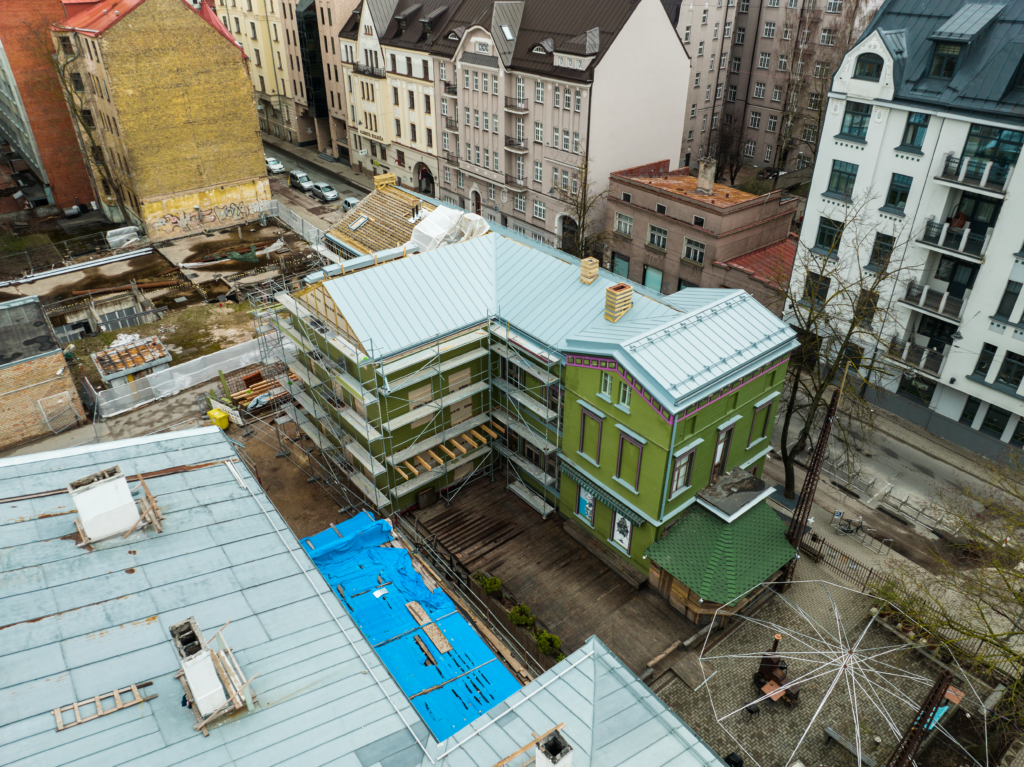
Renovation date: Room by room, brick by brick ever since 2012. Full scale renovation with basement-to-roof reconstruction of approximately 1/3 of the building (previously unused because of it being in a critical condition) started in 2021 and is still ongoing.
Website and social media:
www.kanepes.lv
https://www.facebook.com/Zoo.KKc
https://www.instagram.com/kanepeskc/
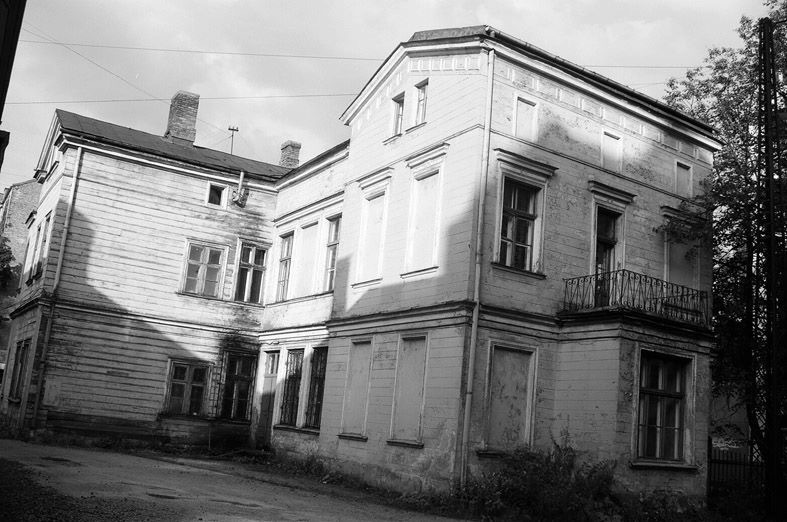
BEFORE
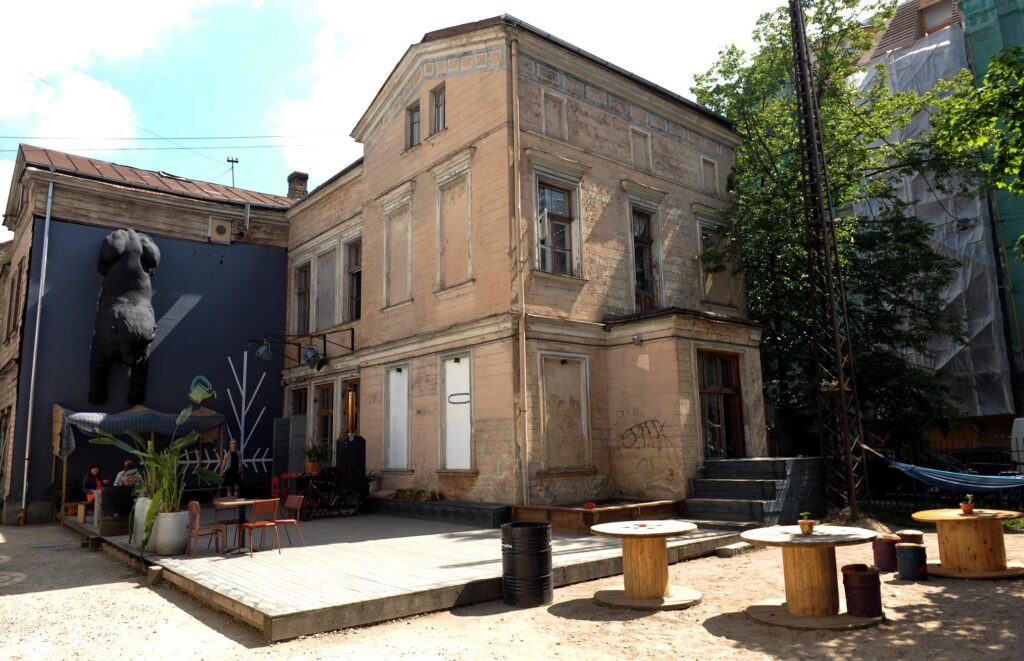
AFTER
ENGLISH
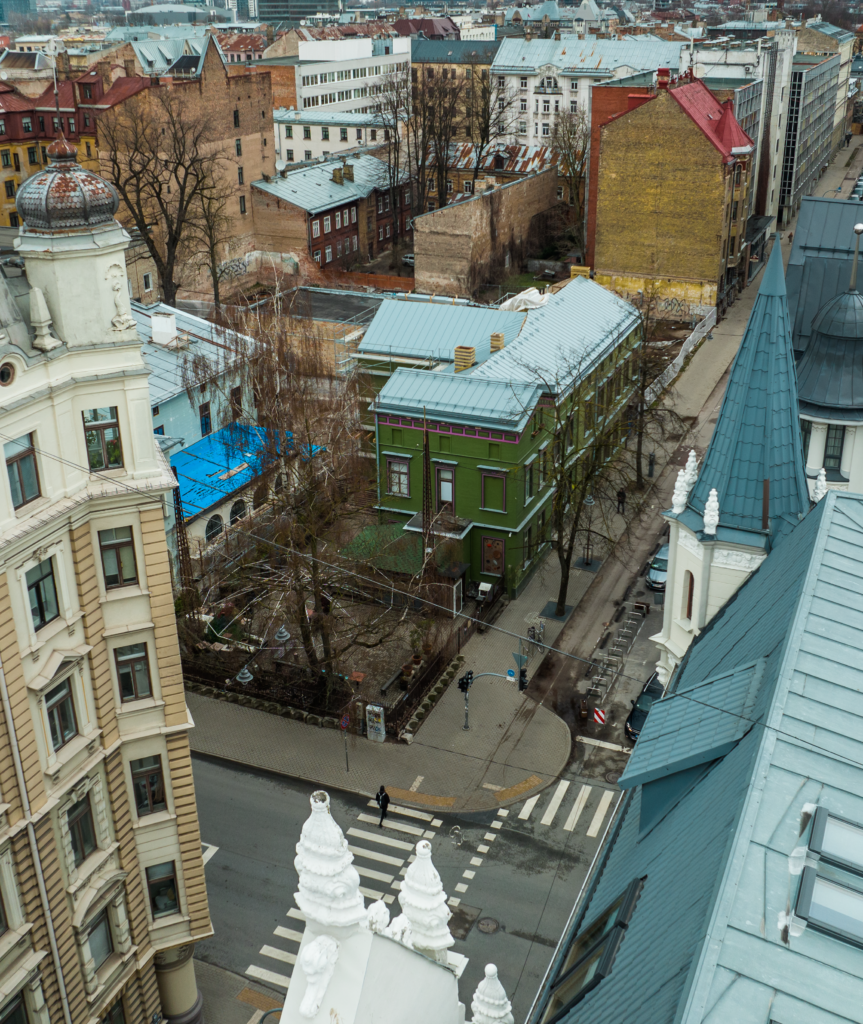
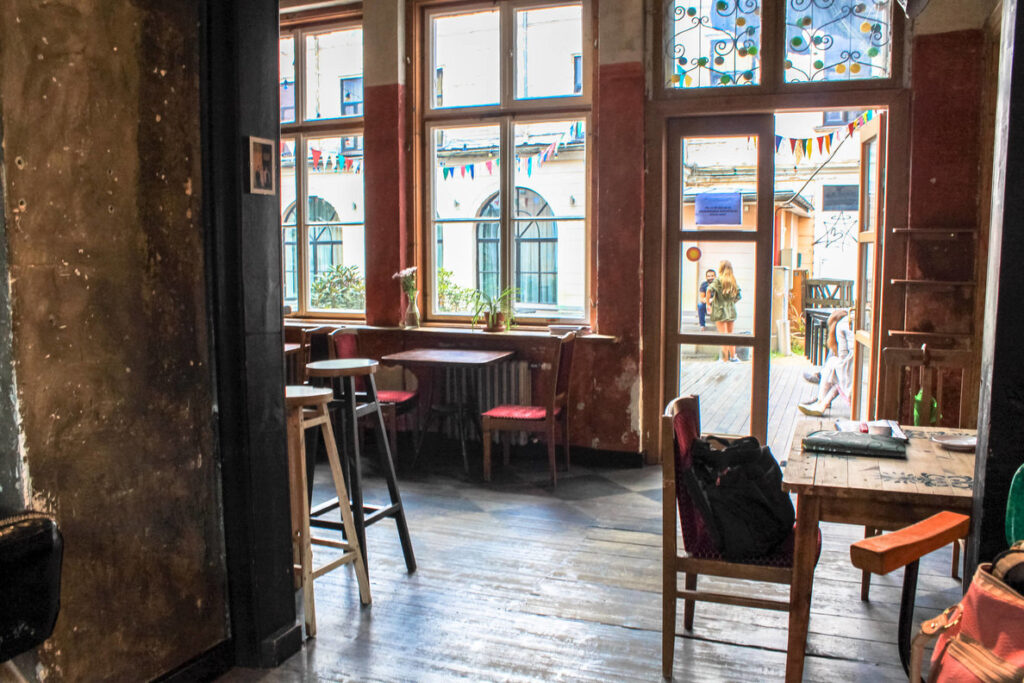
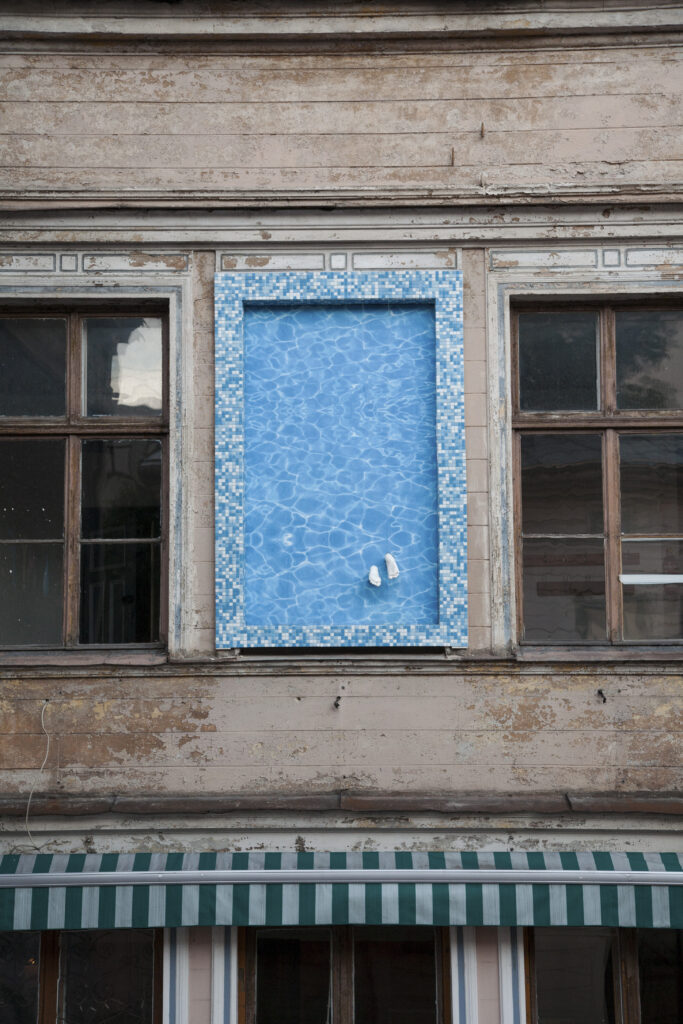
Kaņepes Kultūras centrs (KKC) house is 132 years old that was standing lifeless since 2009. In 2012, KKC arrived and turned it into a bottom-up cultural, social, and political platform that engages with local and international communities, activists, and subcultures for a better world.
Description of the social enterprise and the changes made with the spaces:
Kaņepes Kultūras centrs is a lifestyle, and this is what we mean by that.
In late 2011, all of a sudden it started unfolding. Dāvis Kaņepe, the founder and the name-giver of the place that nowadays sees itself as a third space, got inspired by a lifeless semi-wooden house in the heart of Riga’s historical city center, with car parking (that might as well be a city center garden, if only you change your glance) stretching next to it. A few weeks later, the first informal friends and family and community dinner were organized there. They say sharing food eases you into being open.
And then it just rolled on. Maybe it was because Dāvis Kaņepe had spent two of his previous years in Rome, and word has it, this place did give birth to Veni, Vidi, Vici approach. Maybe it was because back then, in the early after-map of the real estate crisis that hit Latvia indeed so hard, Riga was abundant with lifeless buildings, and the necessity to just do something about it was lingering everywhere in the air (our kudos to the offspring of those times, Free Riga community). In less than half a year, on 20 April 2012, Kaņepes Kultūras centrs officially opened the doors to its visitors.
KKC house is 132 years old. Initially designed as a two-apartment building, it has hosted numerous generations, ever since Baltic-German and Russian aristocrats held their social events, through the interwar bohemia, into the darkest times of Soviet occupation, when it served as a dormitory for Art Academy students. It was then transformed into a music school, where children and adolescents learned their first musical instruments for over 40 years. It was then standing lifeless since 2009. In 2012, KKC people arrived.
We never felt that we’d repurposed the building. We brought it back to life, to serve its purpose, for more generations to come. Year by year, room by room, we turned it into a bottom-up cultural, social, and political platform that engages with local and international communities, activists, and subcultures for a better world.
Within the first years of KKC standing there for every individual’s right to express themselves, to create, and to think freely, a tiny art-house cinema materialized into existence. From ten years perspective – probably too tiny to bring any tangible profit, and yet so dear to the heart that it simply cannot be taken away from the local community. Kino Augusts, therefore, is forever located on the second floor of the KKC building; it is an intimate art-house cinema that aims to show films that might as well change your glance, and it got its aspirational identity from the cinema director Augusts Sukuts, the founding father of Riga International Film Forum Arsenals, the history of which started back in the Soviet times, with a selection of films not accessible to the general public.
On a more pragmatic level, somewhere along the way of KKC’s existence, a bunch of tiny few-square-meter rooms in the attic of the building were combined into an open KKC office. The space that indeed lost the count of how many artists have visited, how many great projects were born, and how many ideas were hanging in the air waiting for somebody to make them happen. From ten years’ perspective, they all now rest on the future hope that someday, a big open office in the attic will happen.
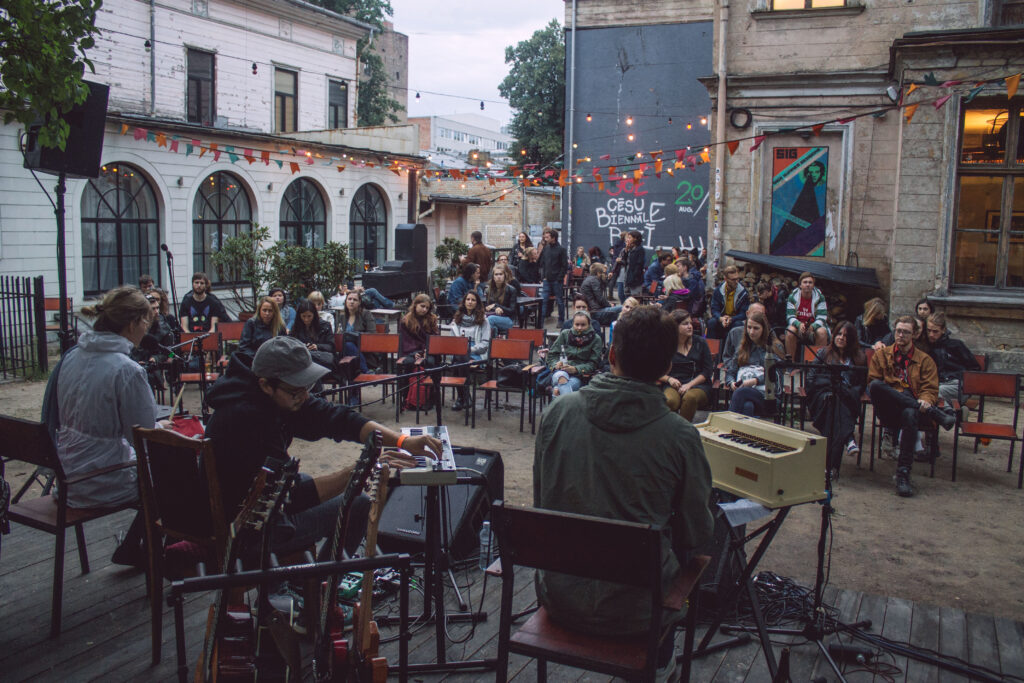
And then of course there always has been music, because you only want to be part of the revolution in which you can dance. A space for parties on the first floor, a concert hall on the second floor, a historical grand piano that we own, a future hope for the music studio in the attic where we used to crowd in a tiny office, and a way of seeing the world that leads us to such projects as #sexismfreenight, safe nightlife advocacy in Riga municipality, ORA! – Online Radio for Activation, Cindy & Kate, the list should go on.
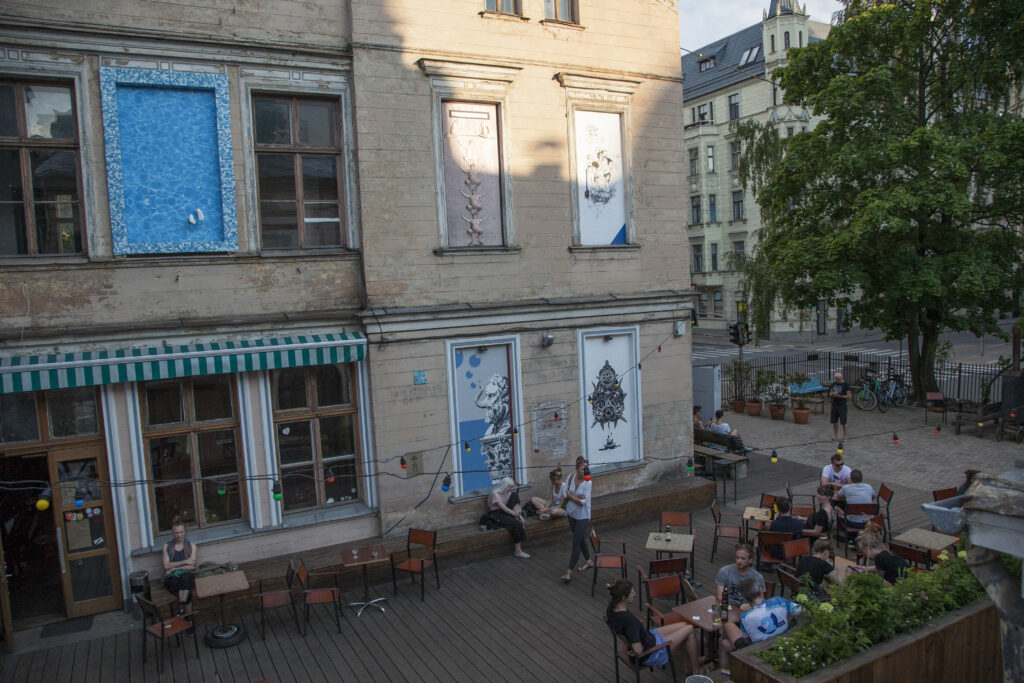
The terrace (remember, it used to be a car parking) is a separate life of its own. Think of the last green oasis on a crossroad, surrounded by 6-floor historical buildings, imagine the echo it creates from its green well along these roads, multiplies it by all of the above, and then you have no other choice but to come and visit. If not for us, then for the events that we are regularly hosting for a better and more inclusive world: Baltic Pride, film and theatre festivals, concerts, performances, circus, the list could go on.
We hope you understand by now, that it all started with one person’s inspiration, food sharing, and community building, and then the lifestyle of continuously being in the process of renovation, reconsideration, reconstitution, reinvention, and, in a nutshell, revolution, began.
What do we do next, you may wonder? Full-scale renovation with a basement-to-roof reconstruction of approximately 1/3 of the building (previously unused because of it being in a critical condition) started in 2021 and is still ongoing!
Description of the changes made in the spaces and their purpose:
KKC house is 132 years old. Initially designed as a two-apartment building, it has hosted numerous generations, ever since Baltic-German and Russian aristocrats held their social events, through the interwar bohemia, into the darkest times of Soviet occupation, when it served as a dormitory for Art Academy students. It was then transformed into a music school, where children and adolescents learned their first musical instruments for over 40 years. It was then standing lifeless since 2009. In 2012, KKC people arrived.
We never felt that we’d repurposed the building. We brought it back to life, to serve its purpose, for more generations to come. Year by year, room by room, we turned it into a bottom-up cultural, social, and political platform that engages with local and international communities, activists, and subcultures for a better world. We stand there to Do as Lovers Do, and we know that the more space we have – the more people can be included.
FRANÇAIS
La maison Kaņepes Kultūras centrs (KKC) a 132 ans et était sans vie depuis 2009. En 2012, KKC est arrivé et l’a transformée en une plate-forme culturelle, sociale et politique ascendante (bottom-up) qui s’engage auprès des communautés locales et internationales, des militants et des sous-cultures pour un monde meilleur.
Description de l’entreprise sociale et les changements que vous avez apportés avec les espaces:
Kaņepes Kultūras centrs est un mode de vie.
Fin 2011, tout a soudainement commencé à prendre vie. Dāvis Kaņepe, le fondateur et le donneur du nom de l’endroit qui se considère aujourd’hui comme un tiers lieu, s’est inspiré d’une maison semi-en bois sans vie au cœur du centre-ville historique de Riga, avec parking (qui pourrait aussi bien être un jardin du centre-ville, avec un autre regard) qui s’étend à côté. Quelques semaines plus tard, le premier dîner informel entre amis, famille et communauté y était organisé. Ils disent que partager de la nourriture vous aide à être ouvert.
Ensuite, tout a fonctionné. Peut-être était-ce à cause du fait que Dāvis Kaņepe avait passé deux de ses années précédentes à Rome, et selon la rumeur, cet endroit a donné naissance à l’approche Veni, Vidi, Vici. Peut-être était-ce parce qu’à l’époque, au début de la crise immobilière qui a frappé la Lettonie si durement, Riga regorgeait de bâtiments sans vie, et la nécessité de faire quelque chose à ce sujet persistait partout dans l’air (nos félicitations à la progéniture de cette époque, la communauté Free Riga). Quoi qu’il en soit, en moins de six mois, le 20 avril 2012, les centres Kaņepes Kultūras ont officiellement ouvert leurs portes à ses visiteurs.
La maison KKC a 132 ans. Initialement conçue comme un immeuble de deux appartements, il a accueilli de nombreuses générations, depuis que les aristocrates baltes-allemands et russes ont organisé leurs événements sociaux, à travers la bohème de l’entre-deux-guerres, jusqu’aux moments les plus sombres de l’occupation soviétique, lorsqu’il servait de dortoir pour les étudiants de l’Académie des beaux-arts. Il a ensuite été transformé en école de musique, où enfants et adolescents ont appris leurs premiers instruments de musique pendant plus de 40 ans. Il était alors debout sans vie à partir de 2009. En 2012, les gens de KKC sont arrivés.
Nous n’avons jamais eu l’impression d’avoir réaffecté le bâtiment. Nous l’avons ramené à la vie, pour servir son objectif, pour d’autres générations à venir. Année après année, pièce par pièce, nous en avons fait une plate-forme culturelle, sociale et politique ascendante qui s’engage auprès des communautés locales et internationales, des militants et des sous-cultures pour un monde meilleur.
Au cours des premières années où KKC défendait le droit de chaque individu de s’exprimer, de créer et de penser la liberté, un petit cinéma d’art et d’essai s’est matérialisé. Dans une perspective de dix ans – probablement trop courte pour apporter un profit tangible, et pourtant si cher au cœur qu’il ne peut tout simplement pas être enlevé à la communauté locale. Kino Augusts est donc toujours situé au deuxième étage du bâtiment KKC; c’est un cinéma d’art et d’essai intime qui vise à montrer des films qui pourraient tout aussi bien changer votre regard, et il a obtenu son identité ambitieuse du réalisateur de cinéma Augusts Sukuts, le père fondateur des arsenaux du Riga International Film Forum, dont l’histoire remonte à l’époque soviétique, avec une sélection de films autrement inaccessibles au grand public.
À un niveau plus pragmatique, quelque part sur le chemin de l’existence de KKC, un tas de minuscules pièces de quelques mètres carrés dans le grenier du bâtiment ont été combinées de manière autonome dans un bureau de KKC encore minuscule mais ouvert. L’espace a perdu le compte du nombre d’artistes en visite, du nombre de grands projets nés et du nombre d’idées suspendues dans l’air attendant que quelqu’un les réalise. Dans une perspective de dix ans, ils reposent tous maintenant sur l’espoir futur qu’un jour, un grand bureau ouvert dans le grenier verra le jour.
Et puis, bien sûr, il y a toujours eu de la musique, car vous ne voulez pas faire partie d’une révolution dans laquelle vous ne pouvez danser. Un espace pour les fêtes au premier étage, une salle de concert au deuxième étage, un piano à queue historique que nous possédons, un futur espoir pour le studio de musique dans le grenier où nous avions l’habitude de nous entasser dans un petit bureau, et une façon de voir le monde qui nous ont conduits à des projets tels que #sexismfreenight, la défense d’une vie nocturne sûre dans la municipalité de Riga, ORA ! – Radio en ligne pour l’activation, Cindy & Kate, la liste va continuer de s’agrandir.
La terrasse (autrefois un parking) est une vie à part. Pensez à la dernière oasis verte sur un carrefour, entourée de bâtiments historiques de 6 étages, imaginez l’écho qu’elle crée de son puits vert le long de ces routes multipliez-la par tout ce qui précède, et vous n’aurez alors plus d’autre choix que de venir et visiter. Sinon nous organisons régulièrement des événements pour un monde meilleur et plus inclusif : Baltic Pride, festivals de cinéma et de théâtre, concerts, performances, cirque, la liste pourrait s’allonger.
Nous espérons que vous comprenez maintenant que tout a commencé avec l’inspiration d’une personne, le partage de nourriture et la construction d’une communauté, puis le mode de vie consistant à être continuellement en processus de rénovation, de reconsidération, de reconstitution, de réinvention et, fondamentalement, en un mot, de révolution a commencé.
Que faisons-nous ensuite, vous demandez-vous peut-être? Une rénovation complète avec reconstruction du sous-sol au toit d’environ 1/3 du bâtiment (auparavant inutilisé car dans un état critique) a commencé en 2021 et est toujours en cours !